Showing posts with label Zach Johnson. Show all posts

Friday, March 15, 2013

North Korea launches missile: source

SEOUL, March 15 (Yonhap) — North Korea fired off short-range missiles into the East Sea on Friday amid heightened tension following its February nuclear test, a military source in Seoul said.
"A North Korean military unit on drill test-fired two shots of short-range missiles, presumed to be KN-02 missiles, into the East Sea" the source said.
The source did not say the exact time of the launching.
"The launch was seen as testing its capability for short-range missiles. It seemed to be conducted on a military-unit level, not at a national level."
North Korea is ratcheting up war rhetoric almost daily in response to the U.N. Security Council's adoption of new sanctions for the country's Feb. 12 nuke test.

N Korea blames US for cyber attack

North Korea has blamed South Korea and the United States for cyber attacks that temporarily shut down websites at a time of heightened tensions over the North's nuclear programme.
Experts believe it could take months to determine what happened and one analyst suggested more likely culprits: hackers in China.
Internet access in Pyongyang was intermittent on Wednesday and yesterday and Loxley Pacific Co, the broadband internet provider for North Korea, said it was investigating an online attack that took down Pyongyang servers. A spokesman for the Bangkok-based company said today that it was not clear where the attack originated.
North Korea's official Korean Central News Agency blamed the shutdown on the US and South Korea, accusing the allies of expanding an aggressive stance against Pyongyang into cyberspace with "intensive and persistent virus attacks".

Japan parliament approves BOJ leaders; focus now on policy

Abe won power in December promising to end two decades of economic stagnation with reforms, big government spending and aggressive monetary easing. He handpicked Kuroda, 68, a vocal advocate of greater BOJ stimulus, as the bank's new chief.
The parliament's opposition-dominated upper house also approved government nominees Kikuo Iwata and Hiroshi Nakaso as Kuroda's deputies, a day after the trio sailed through a vote in the lower house where Abe's ruling party has majority.
Kuroda was approved in the upper house with 186 in favour and 34 against, and Iwata won approval with 124 in favour and 96 against. Nakaso received 199 ayes and 22 no votes.
"We want the BOJ to press ahead with policy steps to achieve its 2 percent inflation target as early as possible," Chief Cabinet Secretary Yoshihide Suga told reporters, adding the government would work closely with the central bank.

Japan seeks to join U.S.-led Pacific trade talks, reform hopes rise

The decision to join talks on the Trans-Pacific Partnership (TPP) launches the "third arrow" in Abe's policy triad following the fiscal pump priming and hyper-easy monetary measures he has pushed since returning to office in December after his Liberal Democratic Party's (LDP) big election win.
 
"Emerging countries in Asia are shifting to an open economy one after another. If Japan alone remains an inward-looking economy, there would be no chance for growth," Abe told a news conference.
"This is our last chance. If we miss this opportunity, Japan will be left behind."
The government estimates that joining the TPP will boost Japan's gross domestic product by 3.2 trillion yen ($33.3 billion), or 0.66 percentage points, offsetting the negative impact on agriculture by boosting exports in other sectors and domestic private consumption.
"Abenomics" has been playing to rave reviews in the Tokyo stock market and with voters, around 70 percent of whom support the prime minister.
Business executives and economists say the real test, though, will be whether Abe buckles down to more controversial reforms such as deregulation, which can hurt vested interests.
"TPP could be a trigger for Japan to implement deregulation in various sectors by using external pressure," said Hideo Kumamo, chief economist at Dai-ichi Life Research Institute.
"It is being seen as a way to stimulate the economy by making the nation more competitive."
The United States and 10 other countries are pushing for a deal by the end of the year and possibly as soon as an Asia-Pacific leaders summit in Bali in October.

Wednesday, February 20, 2013

Japan’s trade deficit widens to a record in Jan

Japan’s trade deficit widened to a record in January as energy imports jumped, highlighting a risk of trying to revive the country’s export engine through policies that could weaken the currency without also pursuing broader economic reforms.

A central bank board member said the yen’s fall was helping exports — they posted their first annual rise in January in eight months — and said the Bank of Japan would push on with its policy, but analysts expect trade deficits to persist for some time yet.
Prime Minister Shinzo Abe has staked his political career on lifting Japan out decades of malaise through aggressive fiscal and monetary policy, but the data indicated a rise in exports on its own was not enough to turn things around.
“Trade deficits could continue for much of this year, if not into next year,” said Norio Miyagawa, senior economist at Mizuho Securities Research & Consulting.
“This shows that on a net basis money is leaving the country. We need to turn this around by increasing our earnings power from exports. A weak yen will help, but it won’t solve all our problems.”
Since November the yen has tumbled 16% versus the dollar to its lowest in nearly three years as expectations have grown about Abe’s promises of radical policy to spark an economy that has contracted for three successive quarters.  
Economists polled by Reuters have raised their economic growth forecast for the 2013/14 fiscal year to 2.1%, expecting the economy to benefit as exports recover due to the weaker yen and improving global demand. The trade deficit reached a record 1.6 trillion yen ($17.1 billion) in January, larger than a median forecast for a 1.38 trillion yen deficit, finance ministry data showed.
Imports jumped 7.3% in January from a year earlier, well above the median estimate for a 1.6% annual increase and the biggest rise since May last year.

Chinese hackers first exposed in 2011

The Chinese military hacking group outed Monday for hacking into 141 companies in 20 industries since 2006 has been in the international headlines before.
In August 2011 at the Black Hat cybersecurity conference in Las Vegas to be precise.
That's when Dmitri Alperovitch, then a research vice president at McAfee went public with details of the machinations of a hacking group then referred to as Shady RAT, a reference to "remote access tool," a technique the gang used to pilfer data from 70 organizations globally, including the United Nations and the International Olympic Committee.
Alperovitch is now co-founder and chief technology officer at CrowdStrike, a security start-up that's about to unveil its new "active defense" systems, designed to make it much more expensive for intruders to access corporate networks, in conjunction with the big RSA cybersecurity conference in San Francisco next week.
"It's exactly the same group," Alperovitch tells USA TODAY. "The group is still active. They did not shut down after our report, and I don't think they'll shut down after this report either."
The disclosure Monday from forensics firm Mandiant dubbed the group APT1, a reference to "advanced persistent threats," a set of tactics data thieves and cyberspies use to penetrate deep into corporate networks and stay hidden as long as possible.
Mandiant's report provides intricate details of daily activities of the ring, and ties its key operatives to China's People's Liberation Army. The disclosure includes a video of the criminals at work; Mandiant officials say they are bracing for reprisals from China.
"The connection to the PLA was new," says Alperovitch. "They did a good job of identifying that."

European Union sanctions North Korea

The European Union imposed trade and economic sanctions on North Korea while condemning “in the strongest terms” the nation’s latest nuclear test.
The 27 EU finance ministers also demanded North Korea abstain from further tests and urged it to sign the Comprehensive Nuclear Test Ban Treaty without delay. The statement came as the ministers met Monday in Brussels.
Their action brings the number of North Koreans subject to a travel ban and an asset freeze to 26, and the number of sanctioned companies to 33. The ministers also banned the export of components for ballistic missiles, such as certain types of aluminum, and prohibited trade in new public bonds from North Korea.
The United States is negotiating in the Security Council for stronger U.N. sanctions against Pyongyang after the council quickly condemned the Feb. 12 atomic blast, the third conducted by the North since 2006.
North Korea says its nuclear program is a response to what it called a U.S. threat and has warned of further, unspecified measures of “greater intensity” if Washington remains hostile, possibly signaling it would conduct further tests if sanctions are tightened further.

North Korea threatens South with "final destruction"

As the saying goes, a new-born puppy knows no fear of a tiger. South Korea's erratic behavior would only herald its final destruction," North Korean diplomat Jon Yong Ryong told the meeting.
Jon's comments drew quick criticism from other nations, including South Korea, France, Germany and Britain, whose ambassador Joanne Adamson said such language was "completely inappropriate" and the discussion with North Korea was heading in the wrong direction.
"It cannot be allowed that we have expressions which refer to the possible destruction of U.N. member states," she said.
A North Korean flag on a tower flutters in the wind at a North Korean village near the truce village of Panmunjom in the demilitarized zone separating the two Koreas in this picture taken just south of the border, in Paju, north of Seoul, February 15, 2013. REUTERS/Lee Jae-WonSpanish Ambassador Javier Gil Catalina said the comment left him stupefied and appeared to be a breach of international law.
"In the 30 years of my career I've never heard anything like it and it seems to me that we are not speaking about something that is even admissible, we are speaking about a threat of the use of force that is prohibited by Article 2.4 of the United Nations charter," Catalina said.
Since the North tested a nuclear bomb last week in defiance of U.N. resolutions, its southern neighbor has warned it could strike the isolated state if it believed an attack was imminent.
Pyongyang said the aim of the test was to bolster its defenses given the hostility of the United States, which has led a push to impose sanctions on North Korea.
"Our current nuclear test is the primary countermeasure taken by the DPRK in which it exercised its maximum self-restraint," said the North Korean diplomat Jon.
"If the U.S. takes a hostile approach toward the DPRK to the last, rendering the situation complicated, it (North Korea) will be left with no option but to take the second and third stronger steps in succession," he said, without indicating what that might entail.
North Korea has already told key ally China that it is prepared to stage one or two more tests this year to force the United States into diplomatic talks, a source with direct knowledge of the message told Reuters last week.

Wednesday, February 6, 2013

Japan Airlines Says 787 Grounding Will Cost It $7.5 Million

TOKYO — Japan Airlines said on Monday that the grounding of its dreamliner fleet would cost it 700 million yen, or $7.5 million, in earnings through March and that it would seek compensation from boeing.In making the announcement, Japan Airlines joined other Dreamliner operators, like All Nippon Airways and United Airlines, in raising the possibility of demanding compensation. That adds to Boeing’s woes as it struggles to determine why a battery aboard a parked 787 burst into flames and another emitted smoke while a plane was in the air last month.

After those incidents, regulators around the world grounded all 50 Dreamliners in service. United States and Japanese officials investigating the two cases have not determined what caused the lithium-ion batteries, made by GS Yuasa of Japan, to overheat.

North Korea’s Latest Video Destroys New York City, Angers ‘Call of Duty’ Makers

North Korea vowed last month to carry out its third nuclear test but has said nothing about timing. As a result, the building suspense in Seoul has prompted many to look at the dates Pyongyang has chosen for past atomic tests, as well as rocket and missile launches.
Dates and numbers have great symbolic importance to North Korea's government. So Pyongyang often schedules what Washington calls "provocative acts" around U.S. holidays and important South Korean political events, an effort to send none-too-subtle messages to its main enemies – Washington and Seoul. Pyongyang also uses the tests to give a nationalistic boost to its citizens, often favoring significant milestones of the state, party and ruling Kim family.

Here's a look at the "meaningful dates" North Korea has selected for past tests and launches, as well as future key dates on which Pyongyang might choose to stage its third nuclear test:

China says extremely concerned after latest North Korea threats

China expressed serious concern on Wednesday after North Korea stepped up its bellicose rhetoric and threatened to go beyond a third nuclear test in response to what it sees as "hostile" sanctions imposed after a December rocket launch.

"China is extremely concerned by the way things are going. We oppose any behavior which may exacerbate the situation and any acts which are not beneficial towards the denuclearization of the Korean peninsula," said Foreign Ministry spokeswoman Hua Chunying.

"We call on all the relevant sides to remain calm and exercise restraint and earnestly work hard to maintain peace and stability in the Korean peninsula," she told a daily news briefing.

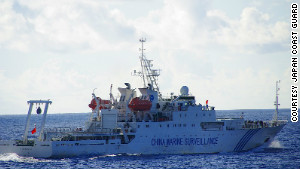
Japanese prime minister accuses Chinese navy ship of "dangerous" act

Tokyo (CNN) -- Japanese Prime Minister Shinzo Abe on Wednesday described as "dangerous" and "regrettable" the actions of a Chinese navy ship that Tokyo says put a radar-lock on a Japanese vessel last week.

His comments come amid severely strained relations between the two Asian powers over a set of disputed islands in the East China Sea.

The tensions over the islands -- which Japan currently administers but both countries claim sovereignty over -- have resulted in maritime standoffs and the scrambling of Japanese fighter jets in recent months.