Showing posts with label Josue M. Show all posts

Wednesday, January 9, 2013

Island dispute continues to fuel China-Japan tensions

Two incidents near the disputed Senkaku/Diaoyu islands in the East China Sea have underscored the danger of simmering tensions between China and Japan erupting into a major confrontation.

The Japanese coastguard reported yesterday that four Chinese marine surveillance ships sailed within 12 nautical miles of the Japanese-controlled islands, known in Japan as Senkaku and in China as Diaoyu. The Japanese foreign ministry issued a formal protest to the Chinese embassy in Tokyo. The alleged intrusion was the first this year and the 21st since Tokyo “nationalised” the islands in 

September, provoking sharp protests from China.
On Saturday, the Japanese military scrambled fighter jets to head off a Chinese civilian surveillance plane that was apparently heading toward the islets. According to Japanese officials, the Chinese aircraft did not enter what Japan considers its airspace. It is the second such episode—on December 13, eight Japanese F-15 fighters were dispatched to intercept a Chinese plane.


The Senkaku/Diaoyu islands are not the only source of tension. On December 29, the Japanese coastguard detained a Chinese fishing vessel that had entered the 200-nautical mile exclusive economic zone around the southern Japanese island of Yasushima. The captain and two crew members were taken to Kagoshima city, on Kyushu, for questioning before being released.
In September 2010, Japan detained the captain of a Chinese fishing vessel after an alleged collision with a Japanese coastguard vessel in waters off the Senkaku/Diaoyu islands and threatened to put him on trial. The arrest rapidly evolved into a tense standoff, in which China threatened to cut off exports of vital rare earths to Japan. The dispute was only resolved when Japanese authorities released the captain.

Indonesia Misses 2012 Budget Deficit Target on Spending Shortage

Indonesia missed its 2012 budget deficit target amid lower-than-expected government spending, capping the growth of Southeast Asia’s biggest economy.
The 2012 budget deficit was 1.77 percent of gross domestic product, below the target of 2.23 percent of GDP, Finance Minister Agus Martowardojo said at a briefing today. Government spending reached 1,481.7 trillion rupiah ($152 billion) compared with the 1,548.3 trillion rupiah target, he told reporters in Jakarta.

“Capital expenditure was low because of land acquisition problems,” Bambang Brodjonegoro, head of fiscal policy at the finance ministry, said at the briefing. “If capital expenditure had met its target, economic growth could have been higher.”

Friday, January 4, 2013

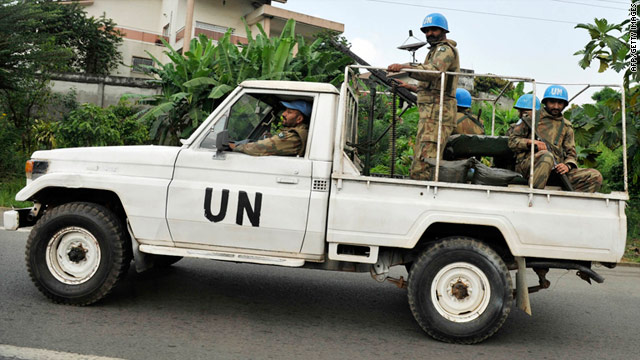
East Timor celebrates coming of age as UN troops leave

The United Nations has pulled the last of its troops out of Asia’s youngest nation, East Timor. It is a symbolic moment for the former Portuguese colony, which gained its independence from Indonesia 13 years ago.

The UN finally ended its peacekeeping mission in East Timor, with the final soldiers leaving on Monday morning.

Since 1999, some 1,500 peacekeepers have been stationed in the country. Leaders expressed excitement about the historic moment in the history of their nation, despite the challenges posed by widespread poverty and lack of development.

"In the end we have to say goodbye to the UN with... high appreciation for what they have been doing," Deputy Prime Minister Fernando La Sama de Araujo told the AFP news agency.

East Timor faces a number of challenges, with drastic improvements planned for schools, hospitals and other services.

"We're optimistic that in 10 years, coming together with many friends around the world including UN agencies for development, we can overcome these challenges," said de Araujo.
Meanwhile, in a New Year speech, President Taur Matan Ruak welcomed the end of the UN mission, praising the peace and stability now enjoyed by the country's population of just over a million.

The electorate of East Timor, also referred to by its official name Timor-Leste, voted for independence in a UN-organized vote in 1999. The poll was followed by political unrest and bloodshed, and East Timor was under UN administration until 2002, when it became a country in its own right.

East Timor shook off some four centuries of Portuguese rule on November 28, 1975, only to be invaded by Indonesia nine days later.

Indonesia pledges $1m in aid to Myanmar's Rakhine state


JAKARTA (AFP) - Indonesia's foreign minister said on Friday Jakarta would pledge US$1 million (S$1.23 million) in aid to western Myanmar's Rakhine state, where tens of thousands have been displaced by sectarian violence.
Clashes between Buddhists and Muslims have left at least 180 people dead in Rakhine since June, and displaced more than 110,000 others, mostly Muslim Rohingya.
Foreign Minister Marty Natalegawa said he would visit Myanmar on a 24-hour trip starting Monday "to deal with the issue of Rohingya on the invitation of the Myanmar government".
"The Indonesian government, when I visit Myanmar, will inform of our pledge to commit $1 million of humanitarian assistance to alleviate humanitarian suffering in Rakhine state," Natalegawa told reporters.

Are you doing your part to help Singapore progress?

No, voting for the correct political party in 2016 is not one of the ways to help Singapore progress that I’m going to talk about in this article. (I say this because I’ve heard plenty of people suggest that this is the number one way we can do our part.)

Instead, I’m going to discuss what other things we can do at an individual level to build a brighter future for Singapore.

This article isn’t about what the government should do to lower housing prices, improve public transportation or create more jobs.


There’s definitely a place for that kind of debate, but I don’t want to talk about the government in this article.

I want to talk about you and me.

How can we make Singapore a more wonderful place to live? How should we adjust our attitude and mindset? What principles should we operate by? How can we behave differently?

I’ve come up with four ways:

1. Focus on pulling ourselves up instead of dragging other people down

When we see people who are richer, more capable, or more knowledgeable than us, how do we respond?
It’s natural to look for reasons why they just don’t deserve to be better off than us. It’s easy to start complaining about how unfair our society is, or even how unfair life is.

When we do this, however, we’re refusing to take complete responsibility for our lives. We’re attempting to drag others down, instead of pulling ourselves up.

We can pull ourselves up by focusing on upgrading our skills and changing our attitude. We can read more books, go for more courses, start new projects, and build new businesses.

There’s always something we can do—no matter how small or seemingly insignificant—to bring us from where we are to where we want to go.

Business owners said to be gaining confidence in Malaysia's economy

PETALING JAYA: Malaysian business owners are gaining confidence in the country's economy, according to the latest Grant Thornton International Business Report (IBR), which pushed up the optimism level to 12% from -4%.

SJ Grant Thornton managing partner Datuk N.K. Jasani said the IBR also revealed that 52% of Malaysian businesses were expecting higher revenue for the year ahead. Meanwhile, 42% of businesses expect to invest in plant and machinery and 35% expect profitability for this year.

For the global economy, according to the report which surveyed 3,200 business leaders in 44 economies, global business optimism stood at 4% at end-2012, up from 0% a year ago.


However, this scenario is painted quite differently for Asia, in particular for Asean nations. The Philippines is the most optimistic at 72%, followed by Singapore at 26% and Thailand at 19%. However, Vietnam's optimism level has dropped from 34% previously to -10% for the year.

Sunday, December 16, 2012

Is RI’s economy immune to global turmoil?


It is interesting to note that Indonesia could be immune to global turmoil as stated by Rintaro Tamaki, deputy secretary-general of the Organization for Economic Cooperation and Development (OECD) at the ASEAN Business Summit in Phnom Penh last month.

Indonesia’s economy will grow by an average 6.4 percent from 2013 to 2017 — the fastest among the 10 ASEAN member countries.

This reminds me of similar comments made by international financial organizations before the crisis in 1998, which praised the Indonesian economy as being healthy with stable economic growth that was
managed in prudent ways.

Everybody was optimistic about the Indonesian economy at that time and nobody expected a severe economic crisis with multidimensional impacts to strike.

Although the Indonesian economy is currently encouraging, it is good to remain alert to the dangers. Before the crisis in 1998, the property sector had been booming, as shown by the development of mega projects that absorbed a big portion of commercial funds.

The property sector became one of the main causes of a bubble economy that led to the crisis. Today, we witness mushrooming super bloc mega projects along Jl. Casablanca in Jakarta — just to mention an example.

There is an alarming sign that property development is aiming at high income groups only (Kompas Dec. 7).

Meanwhile, the government has acknowledged the shortage of funding to develop infrastructure projects, which have been neglected since the 1998 Asian crisis.

Therefore, the government has introduced the public-private partnership scheme in order to bring in private companies to undertake infrastructure projects.

Australian Foreign Minister thinks East Timor ready to stand alone


CARR: I've been struck by how relaxed the leadership is about the wind down of our forces and they understand as we do that it's a matter of moving to a new relationship or a relationship that's going to be governed by a defence cooperation program, by assistance with policing, but without that presence that has been a feature of the last ten years.

The draw down of the Australian-led international stabilisation force simply marks a new phase in our bilateral relationship and I'm very heartened by the way the leadership of Timor Leste has responded to this and very confident.

COCHRANE: Well, a big part of that bilateral relationship is Australia's aid program to East Timor. You met with Emilia Pires last month in Canberra to discuss the new deal that East Timor wants in terms of the way it receives aid from Australia. How will that new deal change the way aid is provided?

CARR: They'll focus on capacity-building and support of education, skills and jobs and I'm going out today to inspect a couple of projects that will highlight that. I'm going to be speaking to graduates of Timor Leste, and I want to see how the skills that we helped them acquire as a benefit of the country. And one feature of the country's development from post-conflict, fragile status is their embracement of labour exchanges with Australia, with the seasonal worker program. It's still small, but I think Australian employers will see the advantage of recruiting and training workers from Timor. They've already been 12 Timorese workers completing placements in the hospitality sector in Broome, in northwest Australia and talking to their ambassador to Canberra, it's got a tremendous capacity to grow.

COCHRANE: Do you think that number should be raised significantly, more than the 12 that have already taken part?

CARR: Oh, yes, dramatically and it's employer driven. The Ambassador is seeking out Australian employers and saying we can fill labour shortages with keen workers from Timor Leste and I think that's got great potential and it's at embryonic stages right now, but I think the potential is great.

COCHRANE: The drive to create jobs within its own country is a big part of the ongoing dispute over the Greater Sunrise natural gas reserves off the coast of East Timor and between Australia. That site remains undeveloped as Woodside Australia and the East Timorese government still can't agree on how to process the LNG. The times running out here. The treaty expires in February. Is Australia prepared to walk away from this project?

CARR: Well, we're committed to working with the government to achieve a positive outcome. We're pleased to see the government of Timor Leste, the joint venture, stepping up their engagements since the election earlier this year. I know progress can appear slow at times, but there are complex issues to work through.

Malaysia wants to boost trade with India to $15 billion by 2015


HYDERABAD: Malaysia is eyeing trade worth over $15 billion with India by 2015, up from the current $12.5 billion, Malaysian minister of international trade and industry, Datuk Seri Mustapa Mohamad said here on Saturday.

The Malaysian minister, who was in the city as part of the Malaysian government's trade and investment mission to India, said that the country, which is at the heart of South-East Asia and has a population of close to 2 million people of Indian origin, can prove to be a strategic market for India.


Malaysia mainly exports palm oil, petroleum products, chemical products and electronic products to India while the major exports from India include machinery, chemical products and metals.

Sunday, December 2, 2012

Malaysia's Leader Rallies Party for Elections He Must Win Big Article Comments


KUALA LUMPUR—Malaysia's leading political party clung to its traditional planks – religion, race and economic progress – during a week-long congress to rally members ahead of general elections next year that will determine whether Prime Minister Najib Razak can stay in his job and pursue reforms he sees as key to modernizing the country within stability.
The elections, which must be held by June, are expected to be the most competitive in Malaysian history. They will pit Mr. Najib and his United Malays National Organization, the core of the National Front coalition that has ruled since independence from Britain in 1957, against charismatic opposition leader Anwar Ibrahim, who is making his last shot at premiership. The 64-year Mr. Anwar has said that he will retire if the opposition fails to form the next government.
Mr. Najib and UMNO barons stressed repeatedly at the congress, which concluded Saturday, that the party had lifted the country's ethnic Malay Muslim majority from poverty to economic security over several decades of affirmative action in their favor and had championed Islam within a multi-religious nation that includes Christian, Buddhist and Hindu elements among the minority ethnic Chinese and Indian communities.
UMNO has portrayed the opposition coalition led by Mr. Anwar as an unnatural alliance of Islamic fundamentalists and multi-ethnic and liberal parties that would fall apart if it won power and jeopardize the country's future. The opposition counters that the National Front has stagnated after decades in power and only a more transparent and open society can propel the Southeast Asia country forward.
image"Without proper, careful and critical evaluation, changing the government is like having the wrong person to fix something, thereby making it worse, or like trusting a wolf to care for the sheep," Mr. Najib said in a speech to the congress.
Most analysts believe that the National Front will gain a victory that would give Mr. Najib the mandate to push for crucial economic reforms such as reducing costly subsides on food and cooking fuel. He plans to introduce a goods and services tax to boost government revenue to cut reliance on income from oil sales and help shrink a budget deficit that has dogged Malaysia since the Asian financial crisis in the late 1990s. Mr. Najib also plans to relax economic preferences for ethnic Malays that could offend his constituents but are needed to spur competition and raise productivity.
But even if he wins, Mr. Najib's political ambitions could be capped if the opposition betters its 2008 electoral score. UMNO is accustomed to big margins and is looking to win back ground after Mr. Anwar led the opposition to its best performance in years in 2008. The opposition captured a record 82 of 222 seats in parliament, robbing the ruling front of its two-thirds majority for the first time, and also won five of Malaysia's 13 states. Since then, the opposition has inched up to 86 seats in parliament but lost control of one state. Mr. Najib, the 59-year-old son of Malaysia's second prime minister, replaced Abdullah Ahmad Badawi in the wake of the debacle and expectations are high for him to stop the opposition's momentum.

UN exodus pinches East Timor economy


East Timor is readying to stand on its own feet as international forces withdraw by the year-end. But for some in the 10-year-old nation, one of the poorest in Asia, the exodus also comes at a steep price.

The bars and restaurants on "the avenida" that runs along the coast of the capital Dili are now lonely haunts with the odd NGO worker or energy company representative dropping in.

The nightly roar of helicopters on patrol has subsided, while the UN's four-wheel drives that once packed the Avenida are replaced by old sedans and ramshackle yellow taxis looking to pick up Timorese for a $2 flat rate.

"Not many UN people come to our bar and restaurant anymore," Dili Beach Hotel manager Domi Riu told AFP.

The bar-restaurant alone used to take in $2,000 a day, but since peacekeepers began withdrawing in large numbers last month, it is lucky to make $500.

Indonesia: 10th Largest Economy By 2025?

When you are the world's fourth most populous country, with over 238 million citizens, it makes sense to think in terms of lifting your game and moving from being the 16th biggest economy in the world to breaking into the world's top 10. This is indeed the target that Indonesia has set for itself, and it has given itself just 12 and a bit years to achieve its goal. According to a far reaching report on Indonesia by the OECD, Indonesia can expect real GDP to grow by around 6% for 2012, with this level continuing through 2013. Moreover, unlike China, which is still struggling to shift from export driven growth to a more balanced economy, Indonesia's growth is being boosted by strong domestic demand.


One of the things that the Indonesian government is currently getting wrong, according to the OECD, is the scale of the subsidies it is providing on fuel. "A substantial reduction in energy subsidies, which fail to achieve their social goals and have significant fiscal costs, would free up resources for pressing social and economic needs," it says. However, the OECD does realize that the country's economy, spread as it is among over 17,500 islands, needs a system of cash transfers from the richer to the poorer, to prevent the scourge of poverty from blighting the economy.

If this is done skilfully, then cash transfers could help to balance the negative impact on the poor of the withdrawal of fuel subsidies, the OECD argues. Politicians on the ground, of course, frequently differ vehemently from economists who are located thousands of miles away and have only an academic grasp of what they are calling for. But there is now considerable pressure from various sustainability bodies for both food and agriculture subsidies to be withdrawn by governments generally. Current thinking is to urge governments to find other kinds of safety nets, since there is a realization that policies that set out to control global market prices or to mitigate global market prices create massive distortions in local economies and can cause really bad local decision making. "Bad" here means bad both in terms of local effects on markets and in terms of the adverse impact on sustainability initiatives.

Singapore Deportations Show Strains Over Foreign Work Force


Singapore’s first labor protest since the 1980s led to the deportation of 29 bus Chinese bus drivers yesterday and the prosecution of five others, highlighting the difficulty balancing a work force reliant on foreign employees.
More than 170 bus drivers failed to report for duty on Nov. 26, while 88 halted work the next day, according to SMRT Corp. (MRT), Singapore’s biggest subway operator and one of its two main bus companies. The striking workers, all from China, were unhappy with their salary increments and raised concerns about living conditions, SMRT said.
The deportations and strike show the perceived inequality among workers on an island reliant on foreign labor with limited union representation. In a city with 3.3 million citizens and 2 million foreigners, complaints about overseas workers depriving locals of jobs and driving up home prices helped opposition parties win record support in last year’s general elections.
The incident indicates that Singapore’s model “may not have kept up with its changing industrial landscape,” said Eugene Tan, a Singapore Management University assistant law professor and a non-elected lawmaker who has limited voting rights. It raises the question of whether workers are adequately represented and how you maintain harmonious industrial relations when workers are segmented, he said yesterday.
Singapore completed the deportations between 12.15 a.m. and 4:35 p.m. local time yesterday, according to an e-mailed statement from the Ministry of Home Affairs late yesterday.
“They were cooperative and the process took place without incident,” it said. “People’s Republic of China Embassy officials, as well as SMRT staff, assisted in the repatriation exercise.”

Saturday, November 24, 2012

Singapore's economy expected to grow 1.5% in 2012


SINGAPORE: Singapore's economy is expected to grow by around 1.5 per cent in 2012 and 1.0 per cent to 3.0 per cent in 2013.

Early estimates show that on a year-on-year basis, the economy grew by 0.3 per cent in the third quarter of 2012, following the 2.5 per cent increase in the earlier quarter.

On a quarter-on-quarter basis, the economy contracted by 5.9 per cent, after growing by 0.5 per cent in the previous quarter.

Permanent Secretary at the Trade and Industry Ministry Ow Foong Pheng said: "Growth may come in slighter lower than forecast if the weakness in the externally- oriented sectors persists into the final quarter of 2012."

The Trade and Industry Ministry said Singapore's economic growth is expected to remain subdued for the rest of 2012 as sluggish external demand will likely weigh down the electronics manufacturing cluster.

While the construction sector could provide modest growth support to the overall economy, it said the electronics manufacturing cluster would continue to be weighed down by weak external demand.

It also said warned that the 1.5 per cent growth forecast for 2012 may even emerge slightly lower, if the weakness in the externally-oriented sectors persists into the final quarter of 2012.

Growth took a hit mainly from the externally-oriented sectors such as manufacturing and wholesale trade.

On a quarter-on-quarter basis, the manufacturing sector contracted by 9.6 per cent with a decline in the electronics manufacturing cluster.

On a year-on-year basis, the manufacturing sector declined by 0.8 per cent, compared to the 4.6 per cent expansion in the previous quarter.

The construction sector expanded by 7.7 per cent on-year compared to 12.3 per cent in previous qua
rter, while the wholesale & retail trade sector contracted by 0.7 per cent on-year, after a 0.4 per cent decline in the second quarter.

On year-on-year basis, the finance & insurance sector declined by 2.7 per cent compared to 0.3 per cent increase in preceding quarter.

The year-on-year growth of the accommodation & food services sector moderated to 2.0 per cent, from 2.9 per cent in the preceding quarter.

MTI said "the growth outlook for the Singapore economy remains cautiously positive" due to the expected sluggishness in the global economy with advanced economies likely to be restrained in growth.

"Growth in externally-oriented clusters such as electronics manufacturing and wholesale trade could remain subdued.

Foreigners beware


COMMERCIAL oil production began in Indonesia in the 1880s. Firms have been drilling for oil and gas there ever since, despite the occasional coup and financial crisis. Still, the country is finding new ways to make life hard for them.
On November 13th Indonesia’s Constitutional Court said that parts of the country’s 2001 oil-and-gas law were unconstitutional, and the court dissolved BPMigas, the state regulator. The constitution says that Indonesia’s natural resources “shall be under the powers of the State and shall be used to the greatest benefit of the people”. The judges took this to mean that a government agency such as BPMigas does not have the authority to oversee reserves and sign production-sharing contracts, especially with foreign firms.
Those firms are worried. The government says that all current contracts will be honoured; and it has quickly transferred regulatory powers temporarily to the energy ministry. Yet even if contracts are honoured, oil giants such as Exxon Mobil, Chevron and CNOOC are wondering what will happen when they come up for renewal. The court recommended that all operations run by foreigners should be handed over to PT Pertamina, the creaky state energy giant, after contracts expire. Indeed Pertamina may again assume the role of regulator, with all the conflicts of interest that implies, unless the government can create a new body sufficiently different from BPMigas to satisfy the court. (Pertamina lost its role as regulator in 2001.)
The immediate effects are unclear. Negotiations with BP, a British oil firm, about a $12 billion expansion of its liquefied natural gas (LNG) facility in Indonesia’s Papua region, have been halted. BP says it is not worried yet. It is working through an approval process that will not end until 2014 for a plant that will come on stream in 2018. Delays are usual in such a scheme.
Pessimists fear that the ruling is part of a recent surge of economic nationalism. In March the government ruled that foreign miners must sell at least 51% of their Indonesian operations to locals after operating for ten years. Previously they were obliged to sell only 20%, albeit after five years.
If history is any guide, mistreating foreign investors will backfire. Crude-oil production has fallen from 1.4m barrels a day in 2000 to 918,000 last year; Indonesia’s oilfields are old and running dry. Production of gas has risen only from 63 billion cubic metres to 76 billion over the same period, well short of its potential. Political uncertainty spooks investors.

Malaysia ETF Could be Next to be Impacted by Politics


Investors in the U.S. are not even three weeks removed from Election Day, but it is worth noting other investable countries will be holding elections in the coming months. Malaysia, which is expected to hold general elections in six months, is a prime of country that is easily accessible to U.S. investors.
The Asian nation is also a prime example of one that can easily be affected by domestic politics. To that end, the iShares MSCI Malaysia Index Fund (NAR:EWM) is one country-specific emerging markets ETF investors will want to keep an eye on in the coming months.
Year-to-date, the iShares MSCI Malaysia Index Fund is up about 10 percent. That performance puts the ETF well behind comparable rivals such as the iShares MSCI Philippines Investable Market Index Fund (NAR:EPHE) and the iShares MSCI Thailand Investable Market Index Fund (NAR:THD) . EWM has also lagged the SPDR S&P 500 (NAR:SPY) by a decent margin.
In its favor, EWM has outperformed those ETFs tracking Indonesia, Southeast Asia's largest economy. Importantly, one reason EWM has likely lagged SPY is beta. As in EWM qualifies as a low-beta ETF. The ETF's beta against the S&P 500 is just 0.62, according to iShares data.
There is another reason to give EWM strong near-term consideration. Prime Minister Najib Razak, the incumbent, and his Barisan Nasional coalition are facing what is expected to be the tightest election in Malaysian history. Following the country's 2008 elections, Barisan Nasional lost its two-thirds majority in parliament, according to Reuters.
Translation: Malaysia has adopted a familiar tactic seen in U.S. That being the opening of government coffers by the party in power to stimulate economic growth in election years. Emerging markets ranging from China to Brazil have announced major infrastructure largesse this year, Malaysia's own infrastructure program has gone largely ignored by foreign investors.

Duty cut on imports will provide relief to end-users


The Federal Ministry of Commerce is yet to implement the duty cut on import of palm oil products from Malaysia that was supposed to come into effect in early 2012.

The Pakistan government should reduce duty on palm oil products’ imports from Malaysia just like the 15 percent duty cut made for Indonesia, importers said.

The duty cut will provide some relief to end users, who are braving high prices of cooking oil and vegetable ghee in the country.

The palm oil products imports increased by 31 percent during July-October 2012 as compared to the same period last year.

The import was recorded at $1.870 billion in ten months 2012 as against $1.495 billion during same period 2010-11.

Pakistan imports around 8 percent of its total requirements of edible oil products from Indonesia. Major quantity of imports is made from Malaysia.

After linking of the imports with the composite rates of dollar, the increase in edible oil prices hit the masses severely as the price of palm oil in local markets has gone up.

We imported more than 2 million tonnes of edible oil products, that catered to about 76 percent of the total country’s edible oil consumption,” said Pakistan Vegetable Oil Mills Association (PVOMA) member Nasir Ibrahim.

The international price of Refined Bleached and Deodorised (RBD) palm oil is hovering around $800 per metric tonne while the price of palm olein around $790 per metric tonne.

The country consumes around 2.2 million tonnes edible oil every year out of which 0.63 million tonnes is contributed by the local growers and the remaining is imported to bridge the demand and supply gap, he added.

UN mission in East Timor ends


This week Australian and UN troops began the draw-down of peace-keeping operations in East Timor, part of the transition to domestic police and security in the country.
UN mission in East Timor ends (Credit: ABC) 
More than 5,000 UN Police have served with UN Mission in Timor since it began in 2006.
The United Nations peacekeeping mission has been a major source of security and employment over the past decade and while there are concerns about what happens once the peacekeeping mission winds up - the mission itself is widely considered a great success.

Tracee Hutchison spoke to Finn Reske-Nielson, Head of the UN Mission in Timor and Acting Special Representative of the Secretary General for Timor Leste.

Indonesia sugar refining capacity to rise by a third


Indonesia's sugar refining capacity will jump by a third to 4.2 million tonnes next year as three more refineries begin production to try and meet rising demand from the food and beverage industries, an industry group said on Tuesday.

There are now eight sugar refineries in Indonesia, which is set to be crowned the world's top importer of raw sugar in the year to September 2013, with existing capacity of 3.2 million tonnes, Suryo Alam, chairman of the Indonesian Sugar Refineries Association, told Reuters.

Singapore moves to calm OTC energy deals

High quality global journalism requires investment. Please share this article with others using the link below, do not cut & paste the article. See our Ts&Cs and Copyright Policy for more detail. Singapore has moved to calm disruption to its over-the-counter (OTC) energy derivatives by temporarily exempting interdealer brokers without a futures broking licences from the need to have one as brokers try to stave off a loss of business to exchanges.
The move highlights how sweeping regulatory changes enshrined in the Dodd-Frank Act in th US are having a knock-on effect in overseas markets.